
 English
 Español
 Portugues
 Pусский
 Français
 Deutsch
 日本語
日本語 한국어
한국어 العربية
 Italiano
 Nederlands
 Polski
 ไทย
ไทย Türk dili
 हिन्दी
 Indonesia
 Tiếng Việt
 čeština
 Română
Airborne electric control valve
An airborne electric control valve is a precision-engineered component used in aircraft pneumatic, hydraulic, or fuel control systems to regulate fluid flow, pressure, and direction with high accuracy. It combines an electric actuator with a valve body, allowing remote and automated control through electrical signals rather than manual operation. This type of valve is widely applied in aviation systems where reliability, fast response, and compact design are essential.In an aircraft, airborne electric control valves play an important role in maintaining stable operation of critical subsystems. They can be used in environmental control systems, landing gear systems, de-icing systems, braking systems, engine-related control circuits, and auxiliary power systems. By opening, closing, or modulating the flow of air, hydraulic fluid, or fuel, the valve helps ensure that the aircraft performs safely and efficiently under different flight conditions.One of the key advantages of an airborne electric control valve is its ability to provide precise control. The electric actuator receives signals from the aircraft’s control unit and adjusts the valve position accordingly. This makes it possible to achieve accurate regulation based on system demands, aircraft speed, altitude, temperature, and pressure conditions. Compared with purely mechanical valves, electric control valves offer better responsiveness, easier integration with automated systems, and improved operational consistency.Another important feature is reliability. Aircraft components must function under extreme conditions such as high vibration, pressure variation, low temperature, and continuous operation. Airborne electric control valves are therefore manufactured with durable materials and tested to meet strict aviation standards. Their design usually emphasizes leak prevention, corrosion resistance, long service life, and stable performance. Many models also include fail-safe functions to ensure that the valve moves to a safe position in case of electrical failure or abnormal system conditions.The structure of an airborne electric control valve typically includes a valve housing, actuator, sealing elements, connector, and control interface. The housing is designed to withstand pressure and environmental stress, while the sealing system ensures tight shutoff and minimal leakage. Depending on the application, the valve may be designed as a solenoid valve, motor-driven valve, proportional valve, or on/off valve. Each type serves different control requirements, from simple switching actions to continuous flow modulation.Because modern aircraft increasingly depend on automation and electronic control, airborne electric control valves have become more important in aviation design. They contribute to weight reduction, simplified pipeline layouts, improved system intelligence, and easier maintenance. Their compact size and efficient operation make them suitable for both commercial and military aircraft.In summary, an airborne electric control valve is a critical aircraft component that enables accurate, reliable, and automated control of fluid or gas flow. Its performance directly affects aircraft safety, efficiency, and operational stability. With the continued development of aviation technology, these valves will remain essential in advanced airborne systems.
Produk
Kategori:
-
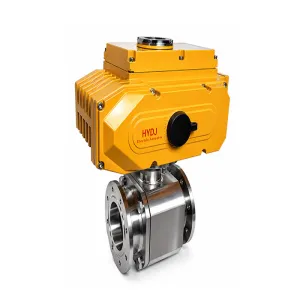
Airborne dedicated electric control ball valve
Klasifikasi mereka: Ball ValvePandangan: 380Nombor:Masa pelepasan: 2026-10-23 14:54:56Nominal Diameter: DN80
Nominal Pressure: PN16
Allowable Medium Pressure: 0~0.6MPa
Berita
Kategori:
Tiada hasil carian!
Kes
Kategori:
Tiada hasil carian!
Video
Kategori:
Tiada hasil carian!
Muat turun
Kategori:
Tiada hasil carian!
Pengambilan
Kategori:
Tiada hasil carian!
Produk yang disyorkan
Tiada hasil carian!



 Whatsapp
 telefon